Let me tell you, getting older comes with its perks, but needing glasses for everything isn't one of them! I recently embarked on a journey to find the perfect vision solution, especially for those long hours I spend in front of my computer. I tried progressive lenses, thinking they'd be the ultimate fix, but boy, was I in for a surprise!
I decided to get progressive lenses, imagining a seamless transition between reading, driving, and computer work. My distance vision is generally okay, just a slight upgrade needed. The optometrist warned me that progressives might cause issues with computer viewing, but I was optimistic. Unfortunately, I quickly realized they weren't ideal for seeing the entire computer screen clearly. It was a frustrating experience, constantly adjusting my head and straining my eyes. I had the lenses redone a few times, hoping for a better outcome, but the core issue remained. My vision just wasn’t sharp enough for comfortable computer use.
I discovered that progressive lenses, while great for many things, struggle with intermediate distances – exactly what you need for a computer screen! It felt like I was constantly searching for the "sweet spot" in the lens, which was incredibly distracting and tiring. I started looking for alternative solutions.
That’s when I learned about occupational lenses, also known as near variable-focus lenses. These are specifically designed for tasks like computer work, offering a much wider and clearer field of vision at that intermediate distance. This was a revelation! Instead of trying to force my progressive lenses to work, I could get a pair dedicated to the computer. I wish someone had told me this earlier!
I also learned that with progressives, you really need to turn your head to keep what you’re looking at in the center of your vision. My eye doctor mentioned this during the exam, emphasizing how important it is to be mindful of head movement. Honestly, I didn't realize how much this would impact my daily use until I was actually wearing them!
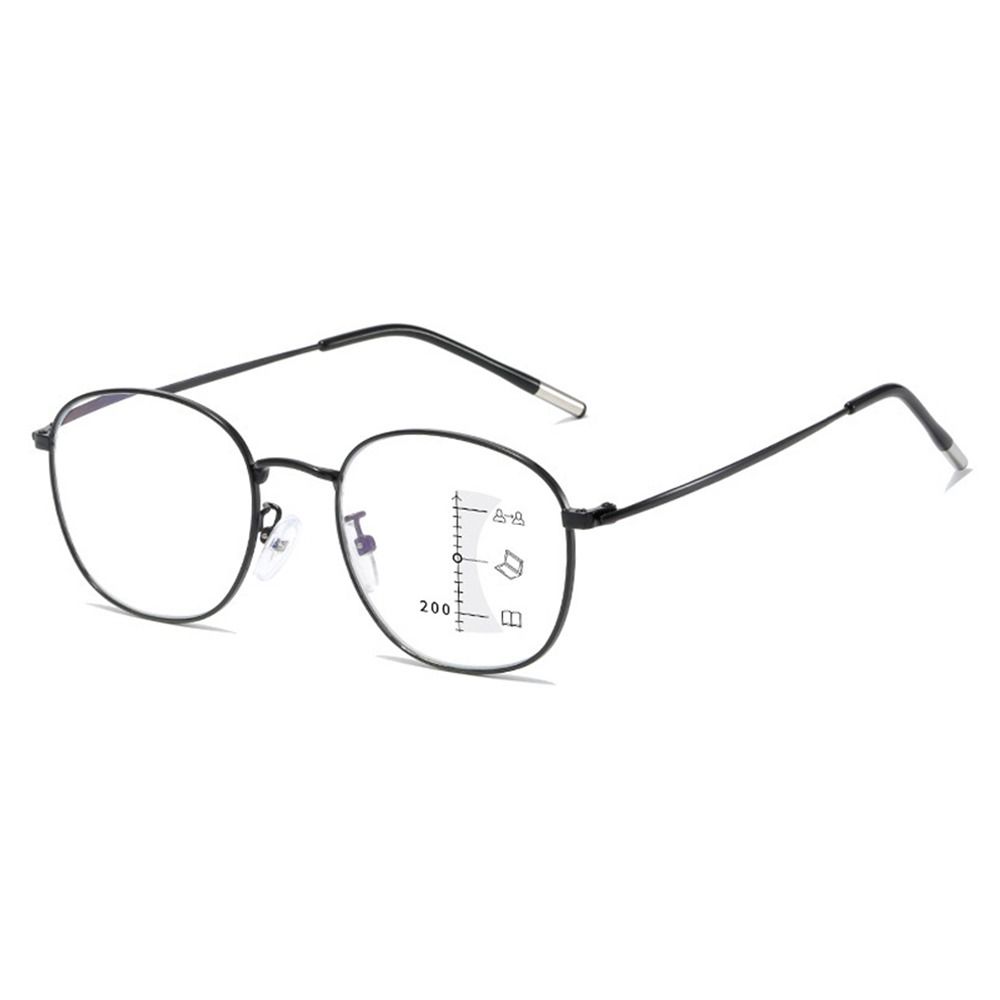
After doing some research, I decided to try a pair of Simple Anti-blue Light Multifocal Reading Glasses. I was drawn to the anti-blue light feature, since I spend so much time looking at screens. These glasses have been a game changer for my work.
The Simple Anti-blue Light Multifocal Reading Glasses offer a much wider and clearer field of vision at that intermediate distance, perfect for computer work. The anti-blue light filter has reduced eye strain and headaches, and the progressive near and far vision correction is a bonus for other tasks.
I’ve found that having a dedicated pair of computer glasses has made a huge difference. I can now see the entire screen without straining, and my eyes feel much less tired at the end of the day. I'm much more productive and comfortable while working.
Based on my experience, here are some tips to consider when choosing glasses for computer use:
I even asked my optometrist about getting different prescriptions for reading, computer use, and distance. He recommended occupational lenses, where the near vision is at the bottom and the intermediate vision is at the top. This setup seems to work best for my needs, allowing me to easily switch between tasks without constantly changing glasses.